

Quick summary: the best apps for irregular or seasonal income do two things: they do not assume this month looks like last month, and they help you carry money from good months into lean ones. Monthly ranks first here because it rebuilds your free-money number from scratch each month with whatever income you enter and has no paid tier. YNAB, EveryDollar, Goodbudget and a spreadsheet each offer a different way to build the cushion.
A steady paycheck makes budgeting almost trivial. Income is a constant, so you only manage the expenses. When pay is $400 one month and $3,100 the next, every number in a typical budget app becomes a guess, and the app’s “remaining” bar starts lying to you. Landscapers in winter, teachers and bus drivers in summer, wedding photographers, tutors, delivery drivers, retail workers with holiday peaks: all need a different shape of tool.
How we compared them
Monthly is our product, so we are ranking ourselves first in an editorial list. We tried to be fair by using each vendor’s own published guidance on variable pay, in October 2026: YNAB’s irregular income guide, Ramsey Solutions’ irregular income article, Goodbudget’s irregular paycheck guide and the plan pages of each app. We did not test each app through a full season, and if a vendor’s page did not say it, we do not claim it.
What irregular income needs from a tool
A lean-month floor. The app should let you see what happens when income drops, not only when it is average.
A way to store the good months. Surplus has to go somewhere visible, or it vanishes.
Low weekly upkeep. The month you are busiest at work is the month you have least time to categorize receipts.
A realistic price. A $109 annual fee is a bigger share of a $400 month.
The ranking at a glance
| Rank | App | How it handles variable pay | Price |
|---|---|---|---|
| 1 | Monthly | Free money recalculated each month from the income you enter | Free core workflow |
| 2 | YNAB | Assign only money on hand; set aside surplus; budget to average | $109 a year or $14.99 a month, 34-day trial |
| 3 | EveryDollar | Plan from a low estimate; Premium plans around paydays | Free tier; Premium $79.99 a year |
| 4 | Goodbudget | Lean budget plus a one-month cushion filling envelopes | Free plan; Premium $10 monthly or $80 yearly |
| 5 | Google Sheets | Whatever you build | Free |
1. Monthly: no assumption that this month matches the last

A favor
- Free core workflow with no paid tier
- Income is entered per month, so a lean month simply shows a smaller number
- Weekend reserve and fixed expenses are subtracted before anything is called free
- Money owed to you is tracked separately, useful when clients pay late
En contra
- It does not forecast income or pull in deposits
- No built-in cushion or tax tool: you enter set-asides yourself
- Manual entry means you update numbers as payments land
Best for: seasonal and freelance earners who want one honest number each month.
Monthly takes this month’s income, subtracts fixed expenses and a weekend reserve, and shows what is left. There is no average to maintain and no category budget to rebalance: change the income and the number follows. The money owed to you feature is the part freelancers tend to like, because an unpaid invoice can sit in its own list instead of being counted as income that is not there yet.
The method for a lean stretch is manual but simple. Treat savings for slow months as a fixed line, so they are subtracted before free money is shown. In a good month that line gets bigger; in a slow one you pay your bills from the stash and leave the line at zero.
2. YNAB: the most developed irregular-income method

A favor
- Published guide: budget only money on hand and smooth the peaks
- Advice to build a buffer so this month is paid with last month's money
- One free year if you are enrolled in college
En contra
- Costs $109 yearly or $14.99 monthly after a 34-day trial
- Category upkeep is weekly work
- A busy season leaves little time for it
Best for: variable earners who want a complete method.
YNAB’s guide tells you to create a plan “by incorporating only the money you currently have on hand,” to set surplus from high-paying months aside for future ones and to budget to your overall average rather than your best month. It also asks five questions each time you are paid, starting with what the money must cover before your next paycheck. It is the most thorough method in this list. It is also the one that asks for most time.
3. EveryDollar: a low estimate, then true up

A favor
- Free tier with manual entry, unlimited categories and sinking funds
- Ramsey guidance: plan with your lowest monthly income
- Premium plans spending around payday and bill due dates
En contra
- Payday planning and bank connection are Premium: $79.99 yearly or $17.99 monthly
- Every dollar needs a line
- Extra income must be assigned after it arrives
Best for: hourly or commission earners who like rules.
Ramsey’s article on irregular income tells you to build the plan on your lowest month, cover the “Four Walls” (food, utilities, shelter, transportation) first and add extra income once it arrives. Its published order is giving, saving, the four walls, other essentials and then everything else. EveryDollar’s page says Premium lets you “plan your spending based on payday and bill due dates,” which suits multiple paychecks that land on different days.
4. Goodbudget: the cushion that fills the envelopes
A favor
- Guide: build a lean budget, then a cushion of one month, or two or three if pay is very unpredictable
- Free plan with ten regular plus ten additional envelopes
- Syncs a household budget across devices
En contra
- Free plan is limited to one account and two devices
- Premium costs $10 monthly or $80 yearly
- You fill and track envelopes each period
Best for: households with a shared pot that fills in lumps.
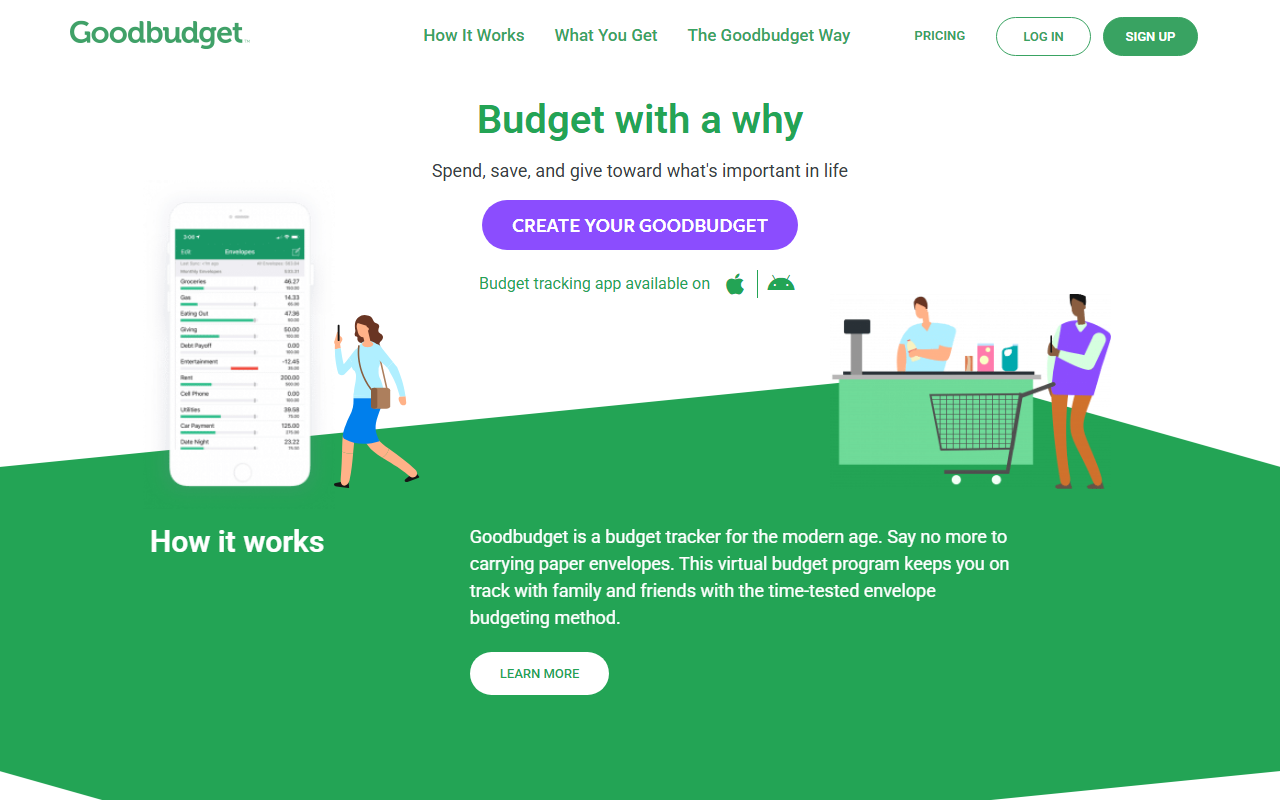
Goodbudget’s guide suggests moving money from fun envelopes into essentials when income drops, then saving a little from each paycheck until it covers about one month of expenses. At the start of each month you fill envelopes from the cushion and replenish it with new income. That cycle is simple and gives seasonal workers a clear target.
5. Google Sheets: a custom tab per quarter
A favor
- Free
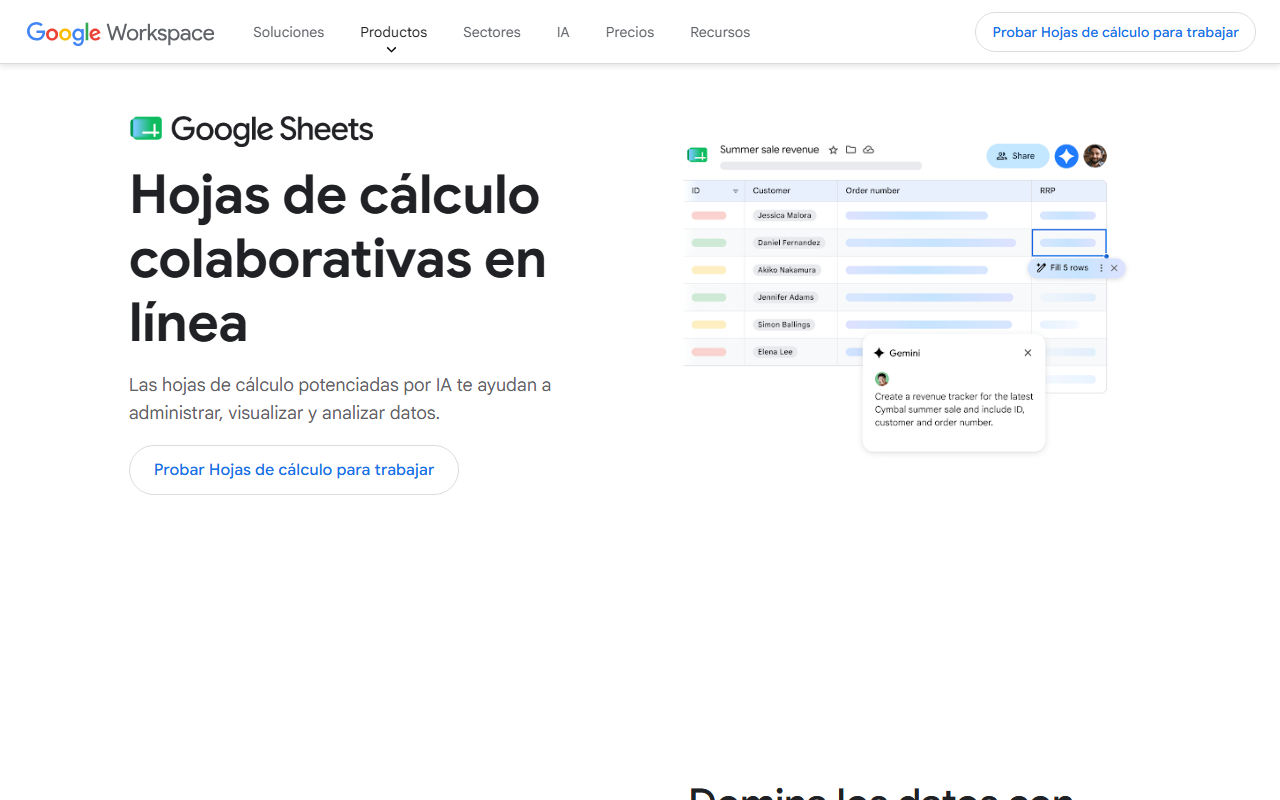
- You decide how to track invoices, taxes and seasons
- Easy to share with a bookkeeper
En contra
- You build every formula
- Nothing warns you when a month is short
- Formula errors go unnoticed
Best for: self-employed people with already complicated income.
A worked example: a seasonal worker with a slow winter
These numbers are invented. A landscaper takes home $4,800 a month from April to October (seven months) and $900 a month from November to March (five months). Annual take-home: $33,600 + $4,500 = $38,100, an average of $3,175 a month. Fixed bills are $2,300 a month. Weekend reserve is $250.
If the landscaper budgets to the summer income, July looks rich: $4,800 - $2,300 - $250 = $2,250 of free money. January looks impossible: $900 - $2,300 - $250 = -$1,650.
The cushion fixes it. The winter gap is $1,650 a month for five months, $8,250 in total. Spread across seven summer months, that is about $1,179 a month. Add it as a fixed line of $1,180 during the busy season:
- Summer month: $4,800 - ($2,300 + $1,180) - $250 = $1,070 of free money.
- Winter month: $900 + $1,650 withdrawn from the cushion - $2,300 - $250 = $0 of free money, with the bills paid.
Summer free money drops from $2,250 to $1,070, which is the price of a winter without debt. Seeing the $1,070 figure all summer is what stops July’s money being spent twice.
Do you have last year’s best and worst months? Enter the slow-season income and your fixed bills in Monthly, find the gap, then add it as a fixed line for the busy months →
Which one for which kind of variable pay
| Your pattern | Start with |
|---|---|
| Predictable busy and slow seasons | Monthly with a cushion line, or Goodbudget |
| Unpredictable monthly swings and time to maintain a method | YNAB |
| Hourly with variable shifts, happy with rules | EveryDollar |
| Late-paying clients | Monthly’s money owed to you list |
| Taxes and invoices mixed together | Google Sheets, plus a tax professional |
Mistakes that break variable-income budgets
Planning around the best month. Both Ramsey and YNAB warn against it in different words.
Counting unpaid invoices as money. Move them to a “owed to me” list until they arrive.
Forgetting taxes. If you are self-employed, set a portion aside as a fixed line. Amounts vary, so confirm them with the IRS or a professional.
No stated floor. Know the lowest income you can survive on, and what you would cut first.
Our guide to living less paycheck to paycheck shows how small buffers add up, and the emergency fund guide shows how to size one.
Final note
Most of these apps can work with irregular pay. What differs is how much weekly effort they ask for and whether they cost money during your slowest months. If you want the lightest version, set your fixed bills in Monthly and change the income line each month. This is general information and not tax or financial advice for your case.